I'm a participant in the Amazon Services LLC Associates Program, an affiliate advertising program designed to provide a means for me to earn fees by linking to Amazon.com and affiliated sites.
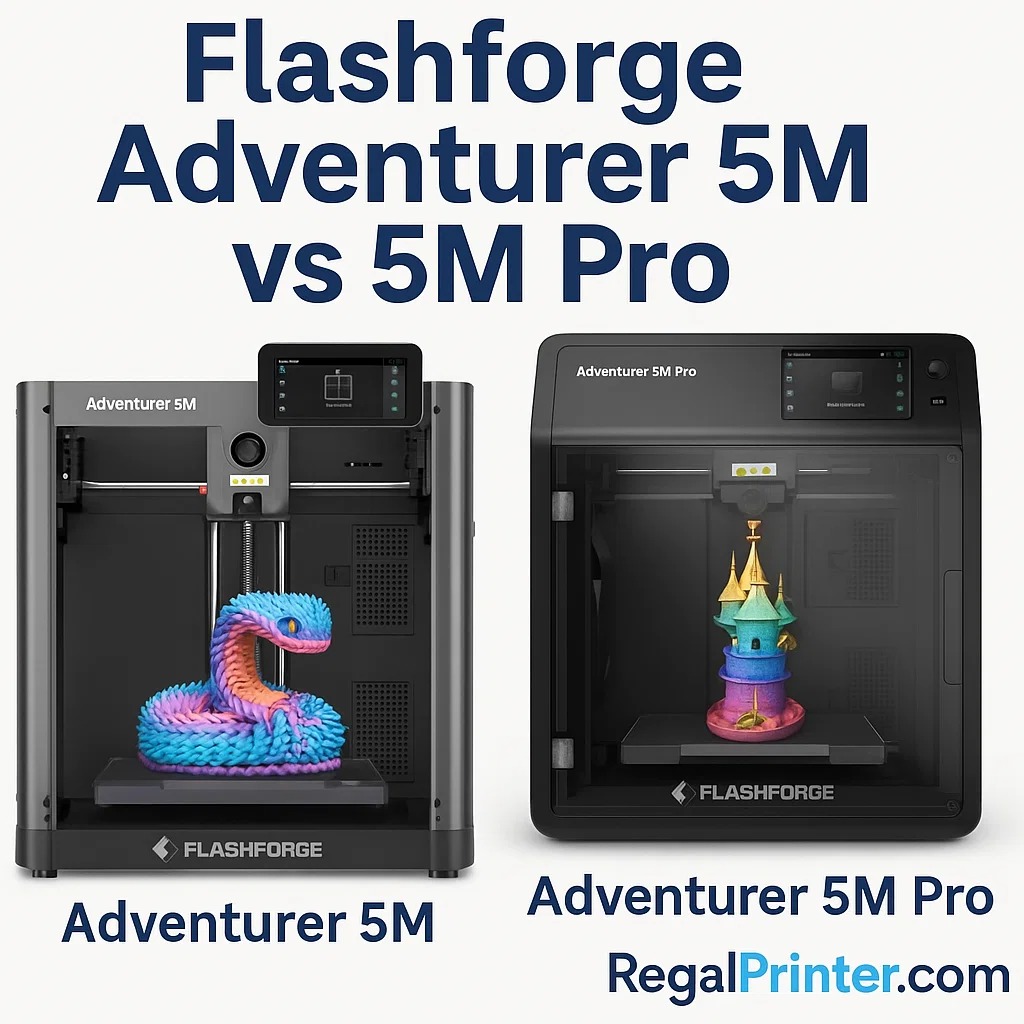
If you’re deciding between the Flashforge Adventurer 5M vs 5M Pro, you’re probably wondering which gives you the best blend of speed, reliability, and value. The short answer?
If you’re a hobbyist printing mostly PLA, go with the Adventurer 5M. But if you want professional-grade stability, material versatility, and quieter performance — the 5M Pro is absolutely worth it.
This matters because your printer choice defines whether 3D printing feels like a fun, reliable hobby or a frustrating trial-and-error project. Let’s break down the differences that really count.
📊 Flashforge Adventurer 5M vs 5M Pro: Comparison Table
Feature | ||
|---|---|---|
 |  | |
Best For | Beginners, classrooms, hobby use | Professionals, advanced makers |
Build Volume | 220 × 220 × 220 mm | 220 × 220 × 220 mm |
Max Speed | Moderate | Up to 600 mm/s |
Max Nozzle Temp | ~240 °C | 280 °C |
Max Bed Temp | ~80 °C | 110 °C |
Filament Support | PLA, TPU | PLA, ABS, PETG, ASA, composite |
Auto Leveling | Manual/Semi | One-click automatic |
Vibration Control | No | Yes |
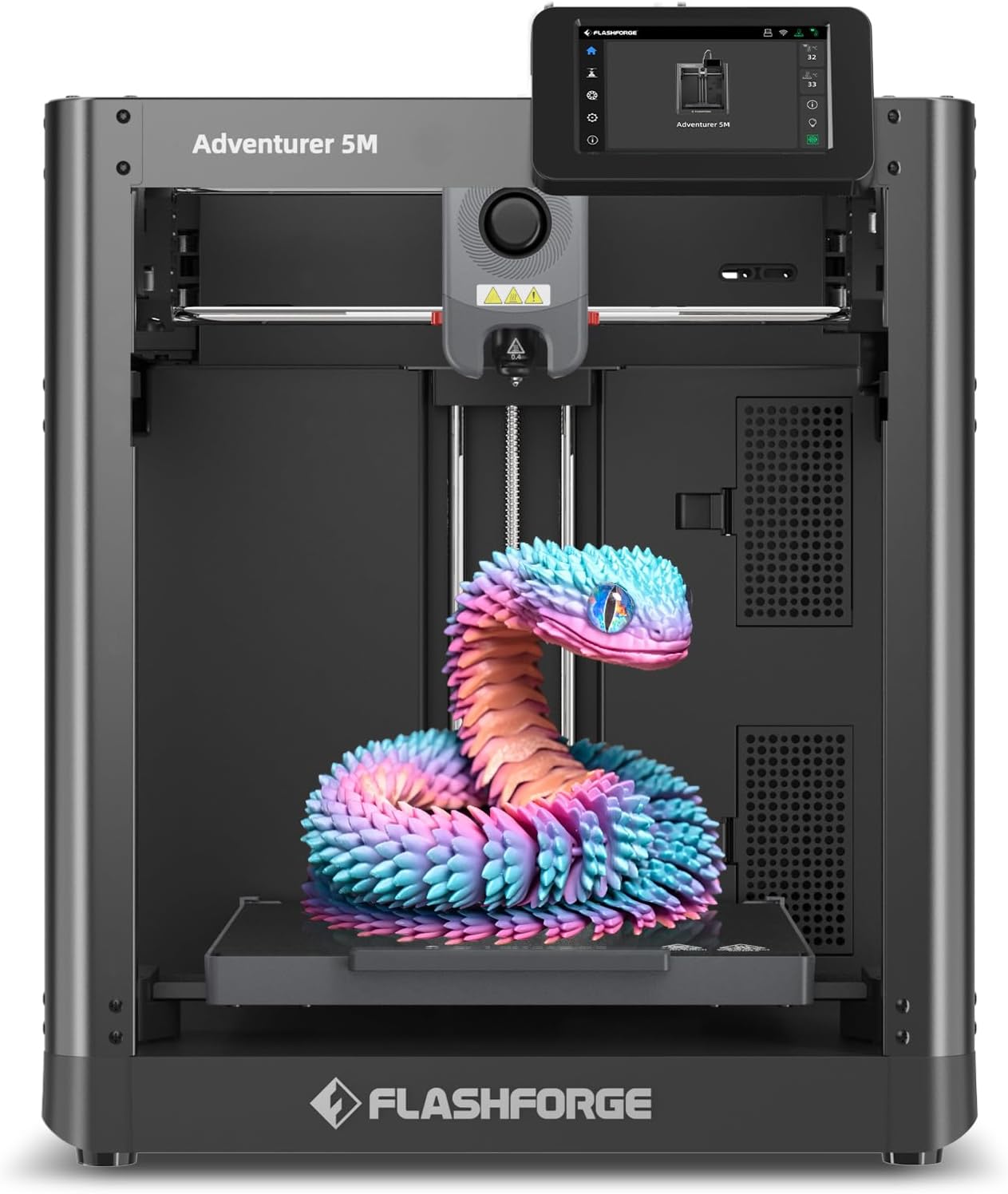
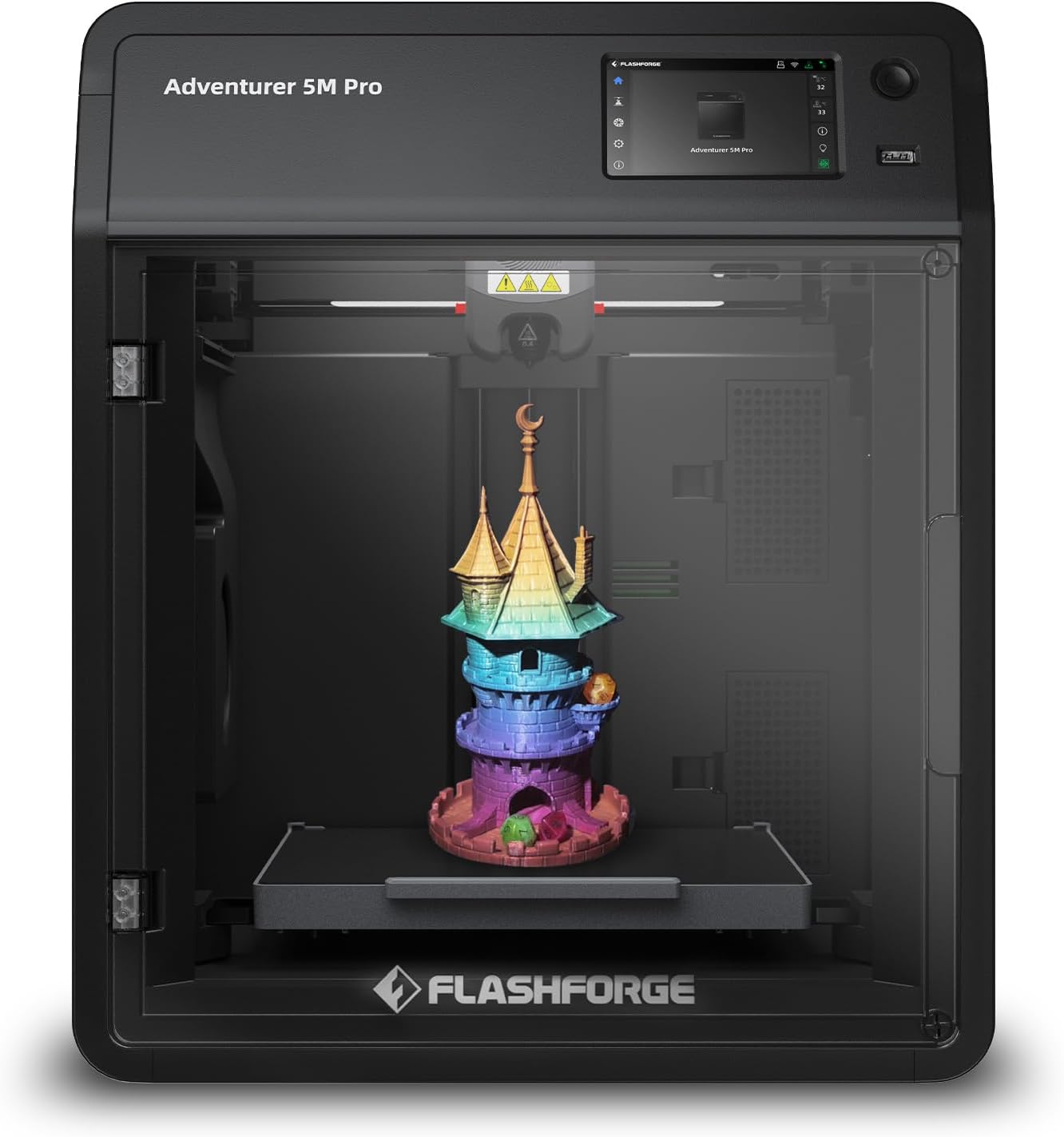
Enclosure | Open | Fully enclosed |
Air Filtration | No | HEPA + Carbon |
Noise | Louder | Quieter |
Price |  | |
🧩 Flashforge Adventurer 5M Pro vs 5M: Design & Usability
At first glance, both printers look similar, but they’re designed for very different kinds of users.
The Flashforge Adventurer 5M has an open-frame design, perfect for quick access and easy maintenance. It’s compact and beginner-friendly, making it a good fit for classrooms, makerspaces, and casual hobbyists. Setup is simple, but calibration and environmental conditions (like drafts or humidity) can affect print quality.
The Adventurer 5M Pro, on the other hand, is fully enclosed, which keeps temperature consistent and protects your prints from warping. It includes one-click auto leveling, quick-release nozzles, and HEPA + activated carbon air filtration — features that make it ideal for users who want more professional, hands-off reliability.
Verdict:
If you want simplicity and accessibility, the 5M wins. But for precision and consistency, especially with advanced materials, the 5M Pro takes the lead.
⚙️ Performance & Features
The difference between these two really shows up in performance.
- Speed: Both advertise high speeds, but the 5M Pro is engineered for it. It reaches up to 600 mm/s with 20,000 mm/s² acceleration, while the base 5M struggles to maintain that level of precision at top speed.
- Temperature Range: The Pro supports 280 °C nozzle and 110 °C heated bed, allowing materials like ABS, PETG, and ASA. The base 5M is best for PLA or similar low-temp filaments.
- Stability: The 5M Pro adds vibration compensation, meaning fewer layer shifts and smoother surfaces at high speeds.
- Noise Level: The enclosure and tuned motors make the Pro significantly quieter — great for home or office use.
Verdict:
The 5M Pro outperforms in nearly every technical category. The base 5M is capable, but the Pro’s refinement is unmistakable once you start printing complex models.
🧰 Ease of Maintenance & Longevity
Maintenance is where the two printers flip roles.
The Adventurer 5M is easier to service because it’s open and straightforward — fewer components mean fewer points of failure. If you like to tinker, you’ll appreciate that accessibility.
The Adventurer 5M Pro, though more complex, protects its internal components with its enclosed build, extending their lifespan. Quick-release nozzles also reduce downtime and make filament changes a breeze.
Verdict:
The 5M is easier to repair, but the 5M Pro stays cleaner, safer, and more consistent over time — better for users who prefer low maintenance over DIY tinkering.
✅ Pros and Cons
Flashforge Adventurer 5M
Pros
- Affordable entry-level 3D printer
- Easy access and simple maintenance
- Ideal for PLA and low-temperature materials
- Quick setup for beginners
Cons
- No enclosure (prone to warping and noise)
- Limited filament compatibility
- Requires manual calibration and environmental control
- Lacks vibration compensation or filtration
Flashforge Adventurer 5M Pro
Pros
- Fully enclosed and temperature-stable
- Supports more materials (PLA, ABS, PETG, ASA)
- Auto leveling + quick-release nozzles
- Vibration compensation for smoother prints
- Dual filtration (HEPA + carbon)
- Quieter operation
Cons
- Higher price point
- More internal components to maintain
- Some early firmware and Wi-Fi quirks
- More reliant on FlashPrint ecosystem
Feature | ||
|---|---|---|
| | |
Best For | Beginners, classrooms, hobby use | Professionals, advanced makers |
Build Volume | 220 × 220 × 220 mm | 220 × 220 × 220 mm |
Max Speed | Moderate | Up to 600 mm/s |
Max Nozzle Temp | ~240 °C | 280 °C |
Max Bed Temp | ~80 °C | 110 °C |
Filament Support | PLA, TPU | PLA, ABS, PETG, ASA, composite |
Auto Leveling | Manual/Semi | One-click automatic |
Vibration Control | No | Yes |
Enclosure | Open | Fully enclosed |
Air Filtration | No | HEPA + Carbon |
Noise | Louder | Quieter |
Price | | |
🔍 Major Differences
Key Area | Adventurer 5M | Adventurer 5M Pro |
|---|---|---|
Best For | Beginners & budget users | Professionals & advanced makers |
Design | Open frame | Fully enclosed |
Speed & Acceleration | Moderate | 600 mm/s, 20,000 mm/s² |
Nozzle Temp | ~240 °C | 280 °C |
Bed Temp | ~80 °C | 110 °C |
Material Range | PLA, TPU | PLA, ABS, PETG, ASA, composites |
Auto Leveling | Manual/Semi | One-click automatic |
Vibration Control | No | Yes |
Air Filtration | None | HEPA + Carbon filters |
Noise Level | Louder | Quieter |
Price Range | ~$239 | ~$449 |
Real-World Use Cases:
- Choose the Adventurer 5M if you’re starting out, printing PLA prototypes, or working in a classroom setting.
- Choose the Adventurer 5M Pro if you’re printing functional parts, multiple materials, or need reliable results without constant calibration.
❓FAQs
Is the Adventurer 5M Pro worth the upgrade?
Yes — if you plan to print frequently or with advanced filaments, the Pro’s enclosure, speed, and stability make it a major step up.
Can the Adventurer 5M print ABS or PETG?
It can, but results are inconsistent due to its open design. The 5M Pro’s enclosed chamber handles those materials far better.
Do both printers use the same build volume?
Yes — both have a 220 × 220 × 220 mm build area.
How fast can the 5M Pro really print?
It reaches 600 mm/s with vibration compensation to maintain surface quality — impressive for its size and price class.
Are they compatible with third-party slicers?
Both primarily use FlashPrint, though some users integrate Cura with custom profiles. The Pro’s firmware is more optimized for the official ecosystem.
Which is quieter?
The 5M Pro’s enclosed design and tuned fans make it much quieter than the open 5M — ideal for shared or home environments.
🧭 Other Interesting Articles
- Canon MegaTank G3270 Setup: Step-by-Step Guide to Get Started Like a Pro
- Canon MegaTank vs Epson EcoTank: Ultimate SuperTank Showdown
- Canon MegaTank G3270 vs Canon PIXMA G6020: Choose the SuperTank That Truly Fits
- Canon MegaTank G3270 vs HP Smart Tank 5000: The Ink-Tank Face-Off
- Canon MegaTank G3270 vs Epson EcoTank ET-2800: No-Nonsense SuperTank Showdown
👨💻 About the Author
RegalPrinter is your go-to expert for in-depth printer and 3D tech comparisons — helping creators, hobbyists, and professionals choose the tools that fit their craft.
Read more insights and detailed guides at RegalPrinter.com.
Whether you choose the Flashforge Adventurer 5M or 5M Pro, you’ll get dependable printing — but only the Pro delivers the performance, polish, and peace of mind to truly grow with you.