I'm a participant in the Amazon Services LLC Associates Program, an affiliate advertising program designed to provide a means for me to earn fees by linking to Amazon.com and affiliated sites.
If you’re choosing a printer, or trying to understand why some prints fade while others don’t, this is the comparison that actually matters: pigment ink vs dye ink.
Here’s the verdict up front:
- Pigment ink lasts longer and is more durable
- Dye ink looks more vibrant and glossy
- Neither is “better” in every situation
Most articles stop there. This one explains why, when it matters, and how the difference shows up in real life, not just lab tests.
Feature | |||||
|---|---|---|---|---|---|
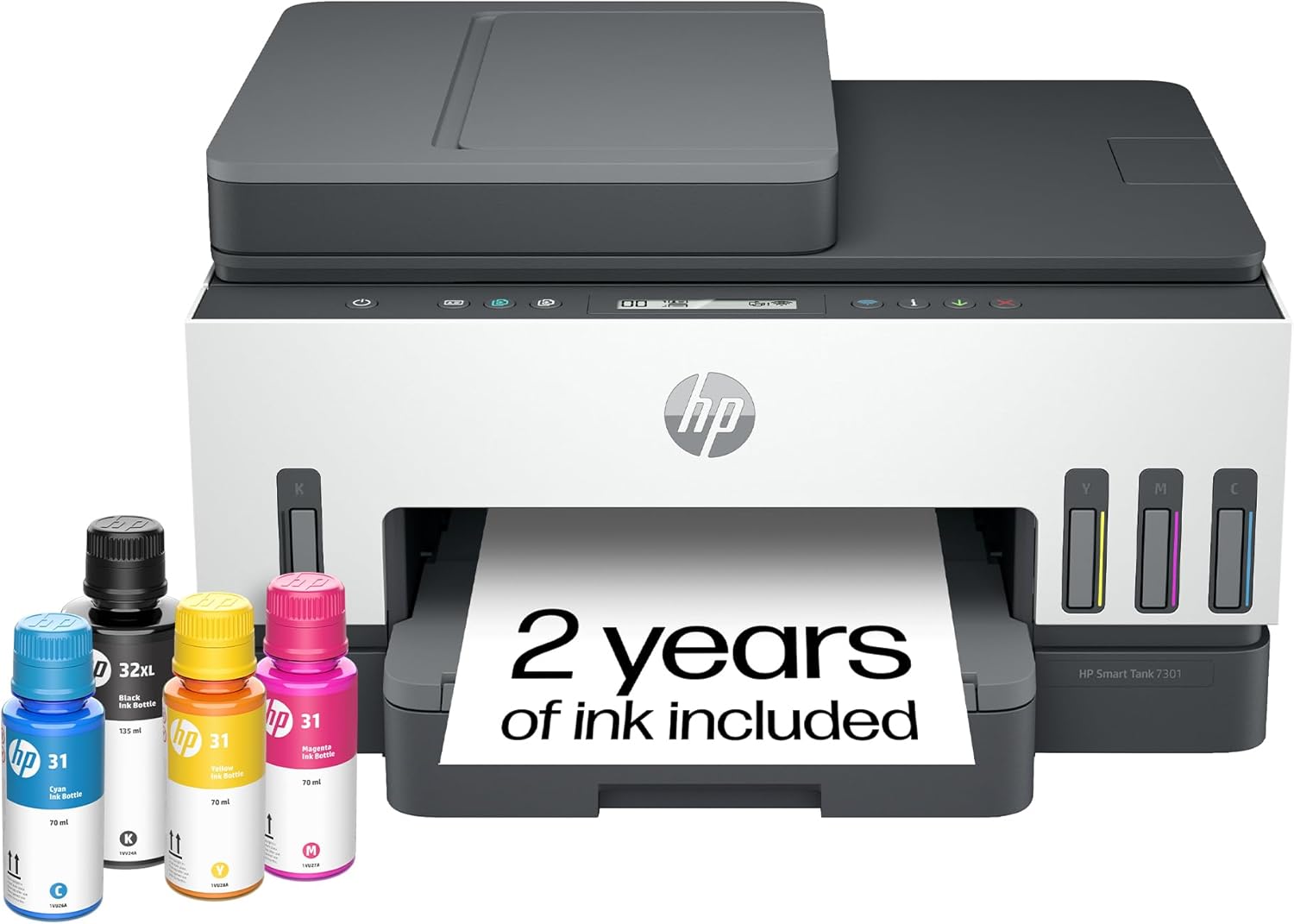 | 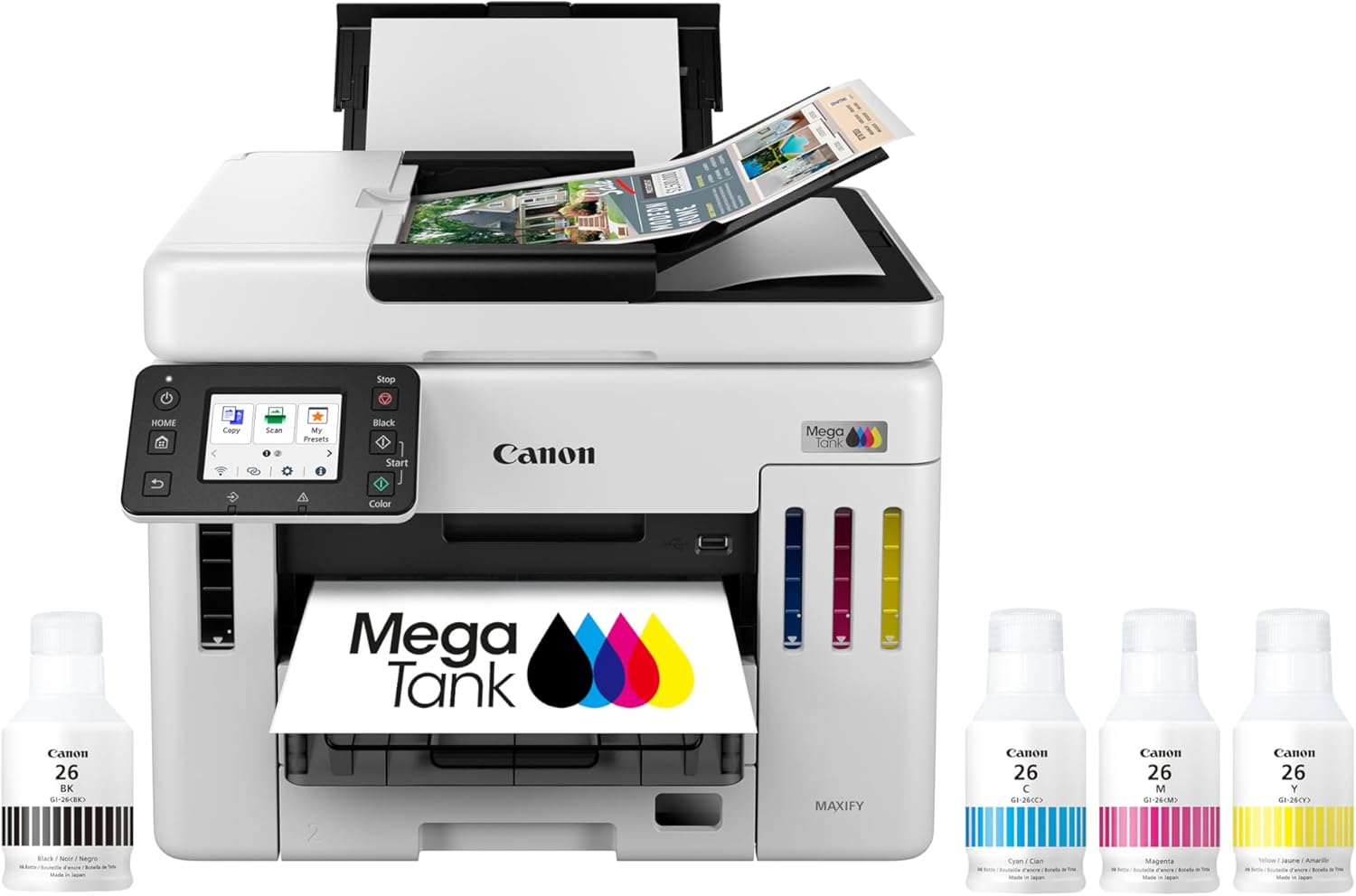 | 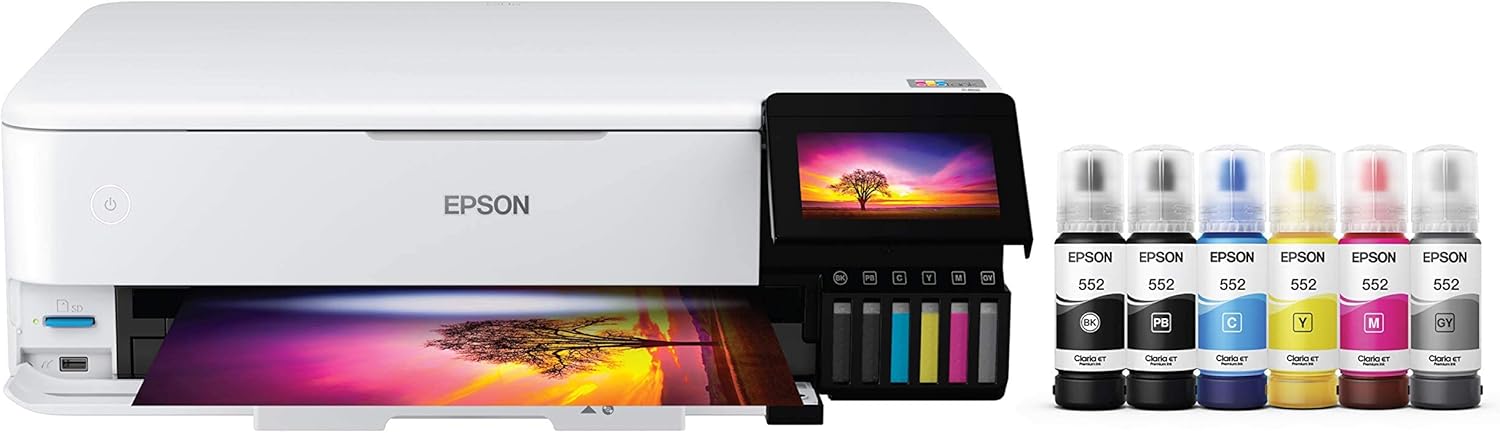 | 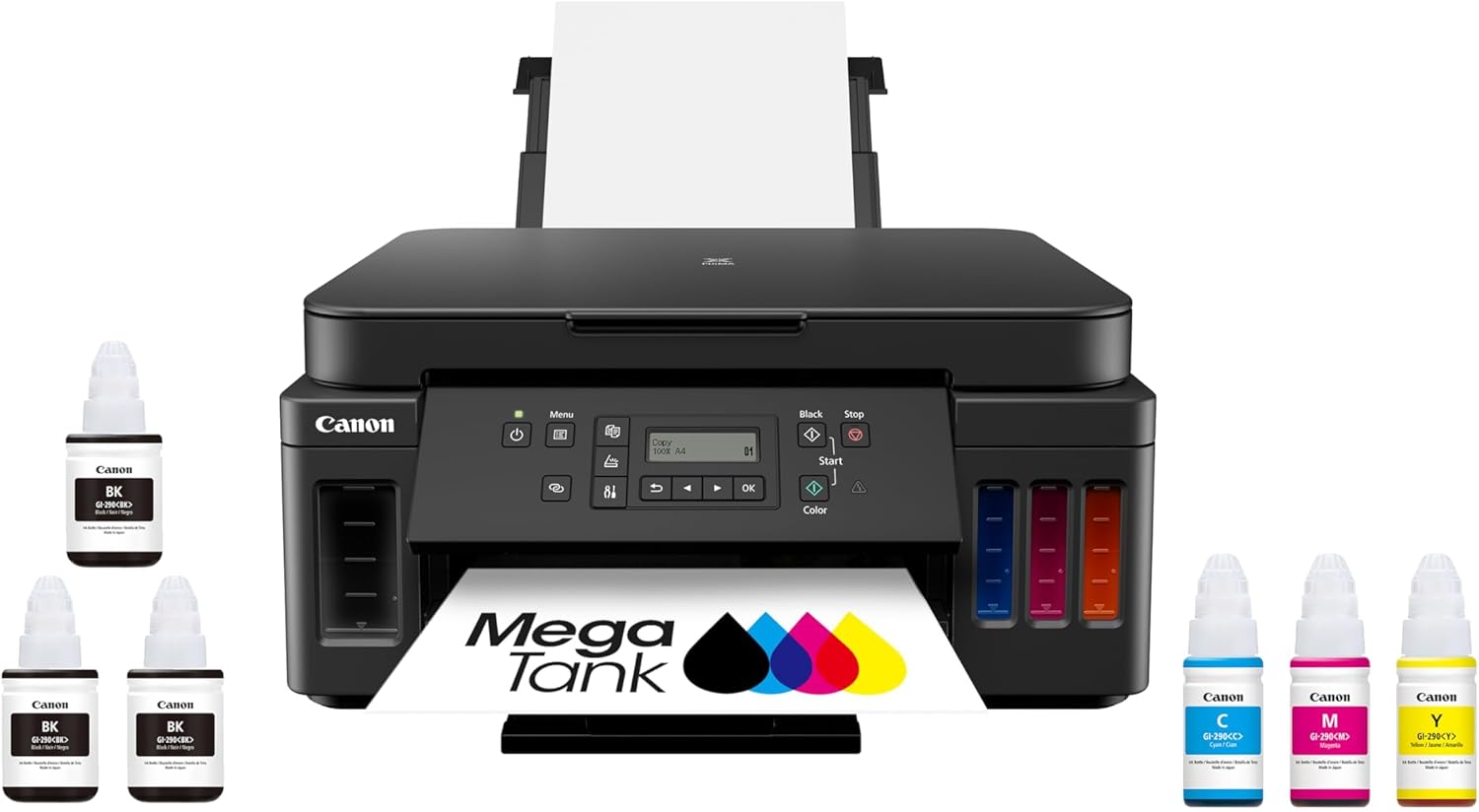 | 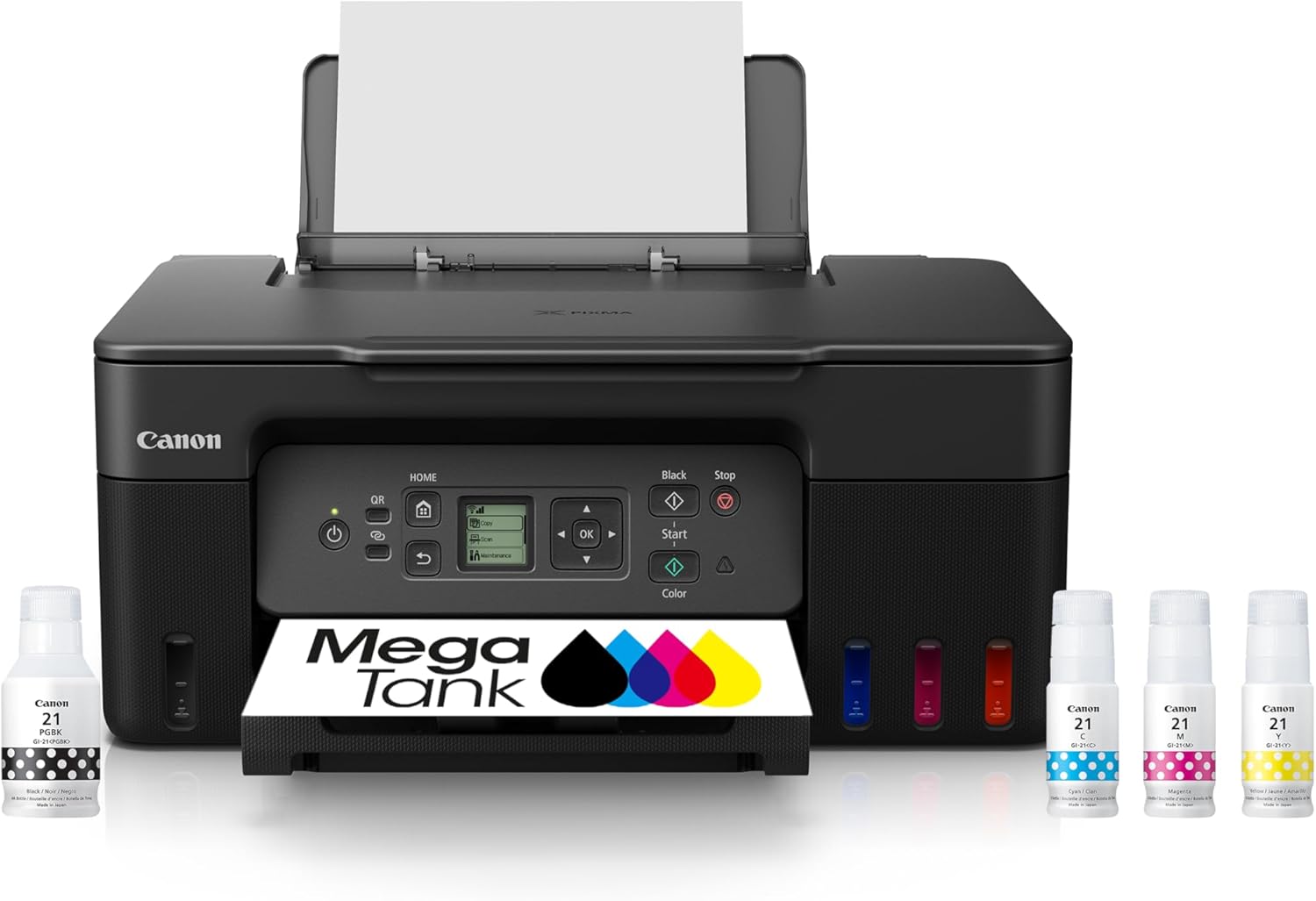 | |
Best for | Families + mixed printing | High-volume home office / small business | Photos, art prints, creative projects | High-yield home office printing | Tight budgets + basics |
Ink system | Refillable ink bottles | Refillable MegaTank | Refillable EcoTank (photo-focused) | Refillable MegaTank | Refillable MegaTank |
Prints a lot without refills | Yes (high-yield design) | Yes (built for volume) | Yes (low cost-per-print focus) | Yes (6,000 black / 7,700 color per set claim) | Yes (budget tank concept) |
Paper capacity vibe | Family-friendly | “I print stacks” (up to 600 sheets cited) | Creative-first, not an office tank | Big (350-sheet capacity) | Basic |
Duplex printing | Depends on config | Typically yes for this class | Yes (common ET-8550 use-case) | Yes (Canon lists duplex capability) | Varies by model/version |
Price |  | | | | |
Verdict in plain English
- If you care about longevity, archival quality, and resistance to fading, pigment ink wins.
- If you care about bright colors, smooth gradients, and photo vibrancy, dye ink often looks better, especially on glossy paper.
- The “best” ink depends on what you print, how you display it, and how long you expect it to last.
Understanding this saves money and disappointment.
What ink actually does (quick foundation)
All inkjet inks have two jobs:
- Deliver color accurately
- Stay where they’re printed over time
Pigment and dye inks approach those jobs in completely different ways.
Top 5 Picks:
- Best overall for most people: HP Smart Tank 7301 (balanced speed/features + easy home use).
- Best for home office volume: Canon MAXIFY GX7020 MegaTank (big paper capacity + business mindset).
- Best for photos + creative work: Epson EcoTank Photo ET-8550 (borderless 13×19 + standout photo quality).
- Best value all-in-one MegaTank: Canon PIXMA G7020 (high page yield + duplex + big capacity for the money).
- Best budget refillable tank: Canon MegaTank G3270 (cheap entry point that still gives you the ink-tank savings).
What is dye ink?
Dye ink is made of colorants that dissolve fully in liquid.
Think of it like:
Sugar dissolved in water
How dye ink behaves
- Soaks into paper fibers
- Produces smooth color transitions
- Reflects light evenly
- Looks especially vibrant on glossy or coated paper
Why people love dye ink
- Rich, saturated colors
- Deep blacks on photo paper
- Excellent for photos and graphics
- Often cheaper to produce
The tradeoff
Because the color is dissolved:
- It’s more vulnerable to UV light
- It can fade over time
- It’s more sensitive to moisture and humidity
Dye ink prioritizes beauty now, not permanence later.
What is pigment ink?
Pigment ink uses tiny solid color particles suspended in liquid.
Think of it like:
Sand floating in water
How pigment ink behaves
- Particles sit on or near the surface of paper
- Bond mechanically and chemically to fibers
- Scatter light slightly differently than dye
Why pigment ink is trusted
- Excellent resistance to fading
- Strong UV stability
- Better water resistance once dry
- Sharp text and lines
The tradeoff
Because particles sit on the surface:
- Colors may look slightly less vibrant on glossy paper
- Gradients can appear less smooth
- Some papers don’t absorb pigment ink as well
Pigment ink prioritizes longevity and durability over maximum saturation.
Feature | |||||
|---|---|---|---|---|---|
| | | | | |
Best for | Families + mixed printing | High-volume home office / small business | Photos, art prints, creative projects | High-yield home office printing | Tight budgets + basics |
Ink system | Refillable ink bottles | Refillable MegaTank | Refillable EcoTank (photo-focused) | Refillable MegaTank | Refillable MegaTank |
Prints a lot without refills | Yes (high-yield design) | Yes (built for volume) | Yes (low cost-per-print focus) | Yes (6,000 black / 7,700 color per set claim) | Yes (budget tank concept) |
Paper capacity vibe | Family-friendly | “I print stacks” (up to 600 sheets cited) | Creative-first, not an office tank | Big (350-sheet capacity) | Basic |
Duplex printing | Depends on config | Typically yes for this class | Yes (common ET-8550 use-case) | Yes (Canon lists duplex capability) | Varies by model/version |
Price | | | | | |
Which ink lasts longer? (the clear answer)
Pigment ink lasts significantly longer than dye ink.
In real-world terms:
- Pigment prints can last decades longer under light exposure
- Dye prints may fade noticeably in years (or sooner in sunlight)
This is why:
- Museums
- Archival printing
- Professional document printing
…almost always favor pigment-based systems.
Fading, sunlight, and “display life”
Here’s where competitors often oversimplify.
Dye ink fading
- Sensitive to UV exposure
- Faster fading in bright rooms
- Vulnerable to ozone and air pollutants
Pigment ink fading
- Much slower under the same conditions
- Holds color integrity longer
- Better for framed or displayed work
Important nuance:
Paper quality and coatings matter almost as much as ink type.
Cheap paper can sabotage even the best ink.
Water resistance: not just a bonus feature
Dye ink + water
- Can bleed or smear
- More vulnerable to spills
- Less ideal for documents that might get handled
Pigment ink + water
- More resistant once dry
- Text stays readable
- Preferred for official or long-term records
This is why pigment ink dominates in business and archival settings.
Color accuracy vs color longevity
This is the tradeoff most buyers don’t realize they’re making.
Dye ink excels at:
- Smooth gradients
- Glossy photo depth
- Saturation and vibrancy
Pigment ink excels at:
- Color stability over time
- Consistent output
- Reliable reproduction across environments
Neither is “wrong.” They’re optimized for different priorities.
Paper compatibility (a critical factor)
Ink choice doesn’t exist in isolation.
Dye ink works best on:
- Glossy photo paper
- Luster and semi-gloss papers
- Papers designed to absorb ink
Pigment ink works best on:
- Matte papers
- Fine art papers
- Textured or cotton-based papers
Mismatch ink and paper, and you’ll get disappointing results, no matter how good the printer is.
Smudging, bleeding, and everyday handling
Another real-world difference:
- Dye ink can smudge if touched too soon or exposed to moisture
- Pigment ink dries more robustly and resists handling damage
For:
- Reports
- School work
- Forms
- Mailers
Pigment ink is usually more forgiving.
Common myths (cleared up)
“Pigment ink always looks dull”
Not true. It can look slightly less glossy, but color quality depends heavily on paper and settings.
“Dye ink always fades quickly”
Not always, but it fades faster relative to pigment, especially with light exposure.
“Pigment ink is only for professionals”
False. It’s about durability, not status.
“Ink type doesn’t matter for home users”
It absolutely does, especially if you keep or display prints.
Which ink should you choose?
Choose pigment ink if you:
- Want prints to last
- Display documents or artwork
- Care about fade resistance
- Print text-heavy documents
- Value durability over shine
Choose dye ink if you:
- Print photos for albums
- Want vivid, glossy color
- Print casually
- Don’t need decades-long longevity
- Prioritize visual impact now
Many people unknowingly choose the wrong ink and only realize it years later.
FAQ: Pigment vs Dye Ink
Does pigment ink last longer than dye ink?
Yes. Pigment ink is far more resistant to fading and environmental damage.
Is dye ink better for photos?
Often, yes, especially for glossy photos where vibrancy matters more than longevity.
Can pigment ink be used for photos?
Yes, particularly on matte or fine art papers where longevity is important.
Why do some prints fade faster than others?
Ink type, paper quality, light exposure, and air quality all play a role.
Is pigment ink waterproof?
It’s more water-resistant than dye ink once dry, but not completely waterproof.
Final takeaway
Pigment vs dye ink isn’t about “good vs bad.” It’s about priorities.
- Pigment ink is built to last
- Dye ink is built to look stunning right away
If you know what you’re printing, and how long you want it to survive, the right choice becomes obvious.
Most regret comes from choosing ink based on price or marketing instead of understanding this difference.
Other Interesting Articles
- Best Cheap Printers With Cheap Ink (2026): 5 Picks That Stay Affordable After Checkout
- Best Printers With Refillable Ink Tanks (2026): 5 Picks That Actually Save You Money
- Epson EcoTank Photo ET-8550 vs Canon imagePROGRAF PRO-300: Which Photo Printer is Best?
- Epson EcoTank Photo ET-8550 vs ET-15000: Beautiful Photos or Common Office Printer
- Epson EcoTank Photo ET-8550 vs Canon PIXMA PRO-200S: Price or Quality Photo Printing
- Epson EcoTank Photo ET-8550 vs ET-8500: One Major Difference You Need to Know
About RegalPrinter
RegalPrinter offers the best reviews for inkjet printers, laser printers, 3D printers, and other similar office machines that you use in your everyday life. We provide expert information that will ensure you are making the right decision whenever buying any of these machines. Our “Pigment vs Dye Ink” post will ensure you know which is right for you.