I'm a participant in the Amazon Services LLC Associates Program, an affiliate advertising program designed to provide a means for me to earn fees by linking to Amazon.com and affiliated sites.
(Clogs, Drying Out, and the Realistic Ownership Check) Are Ink Tank Printers Worth It If You Don’t Print Often?
Short answer: sometimes, but not automatically.
Ink tank printers are famous for cheap ink and huge page yields. What they’re not famous for is being carefree if you only print once in a while. Whether an ink tank printer is worth it for infrequent printing depends less on the printer itself and more on your habits, expectations, and tolerance for light maintenance.
This guide cuts through marketing and forum fear-mongering to give you the reality check most articles skip.
Feature | |||||
|---|---|---|---|---|---|
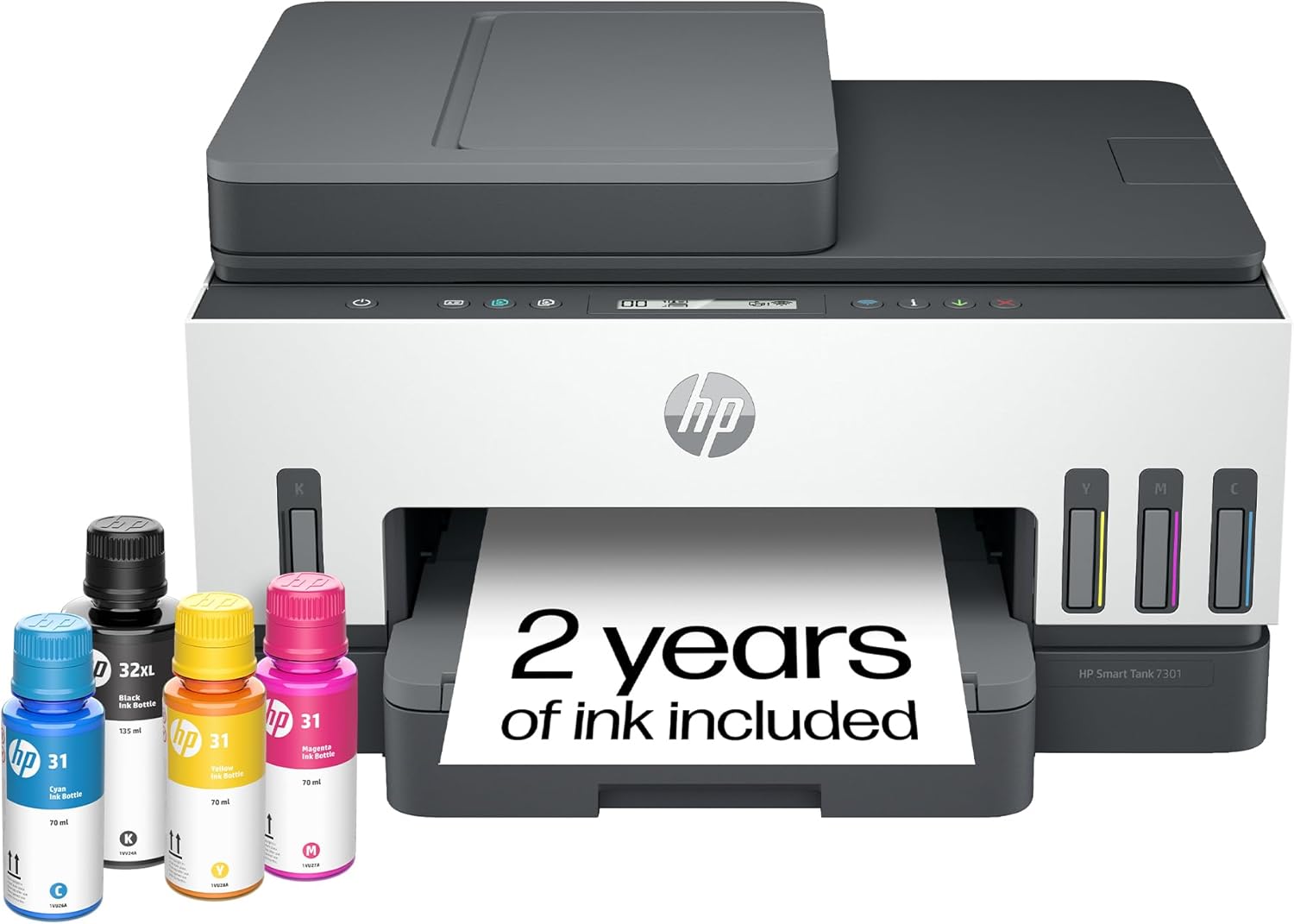 | 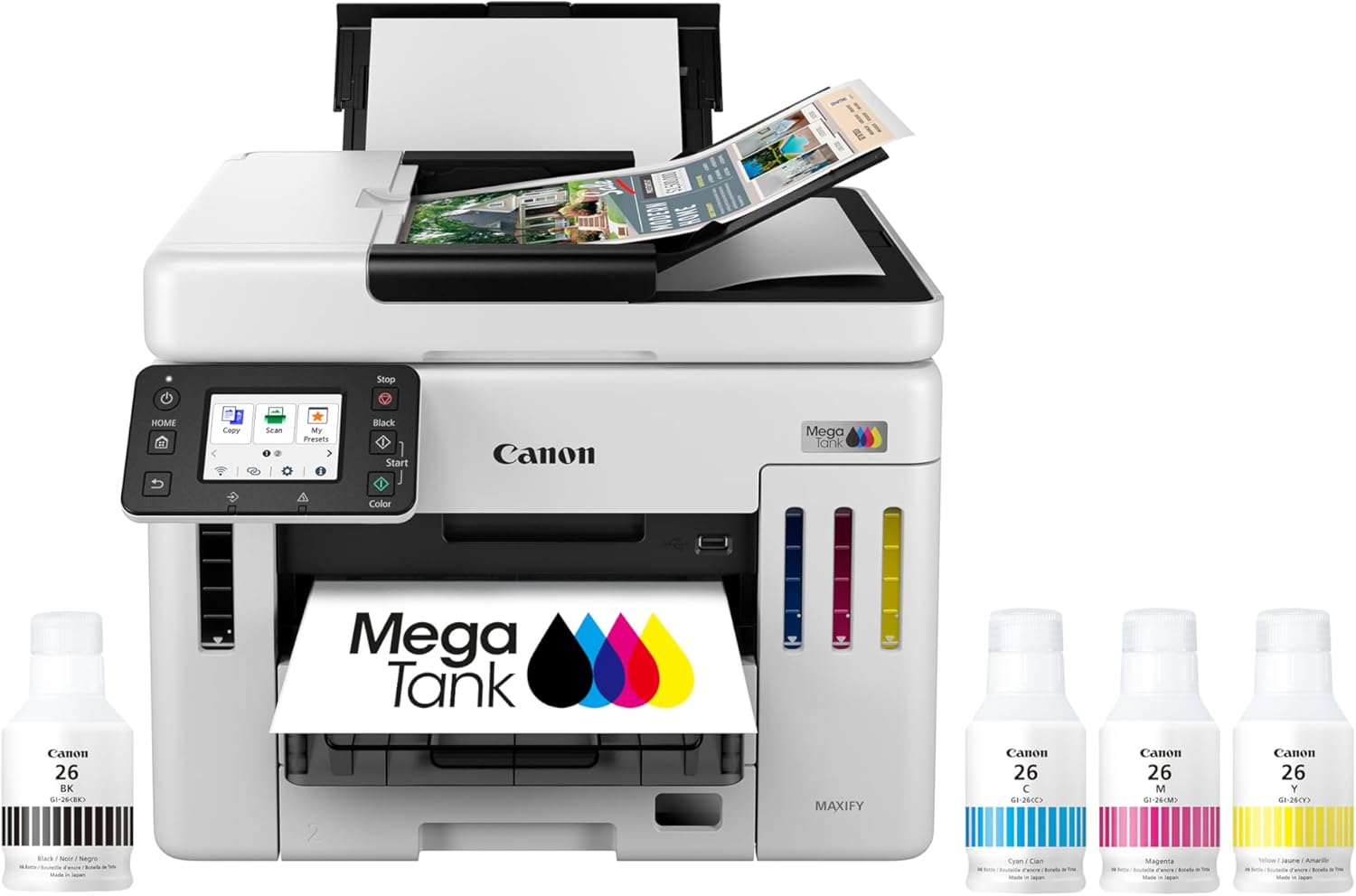 | 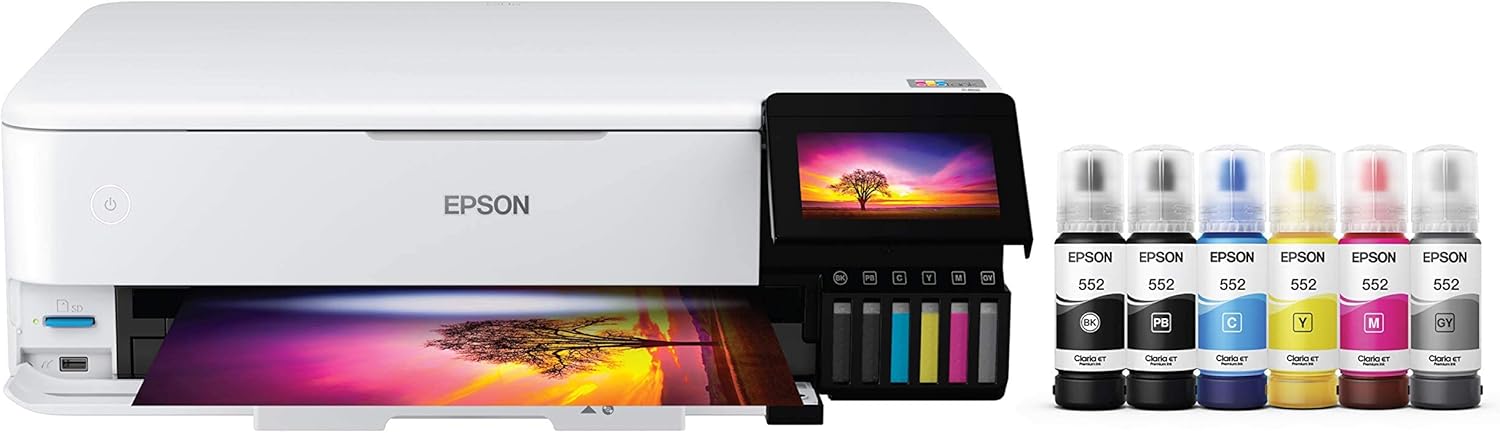 | 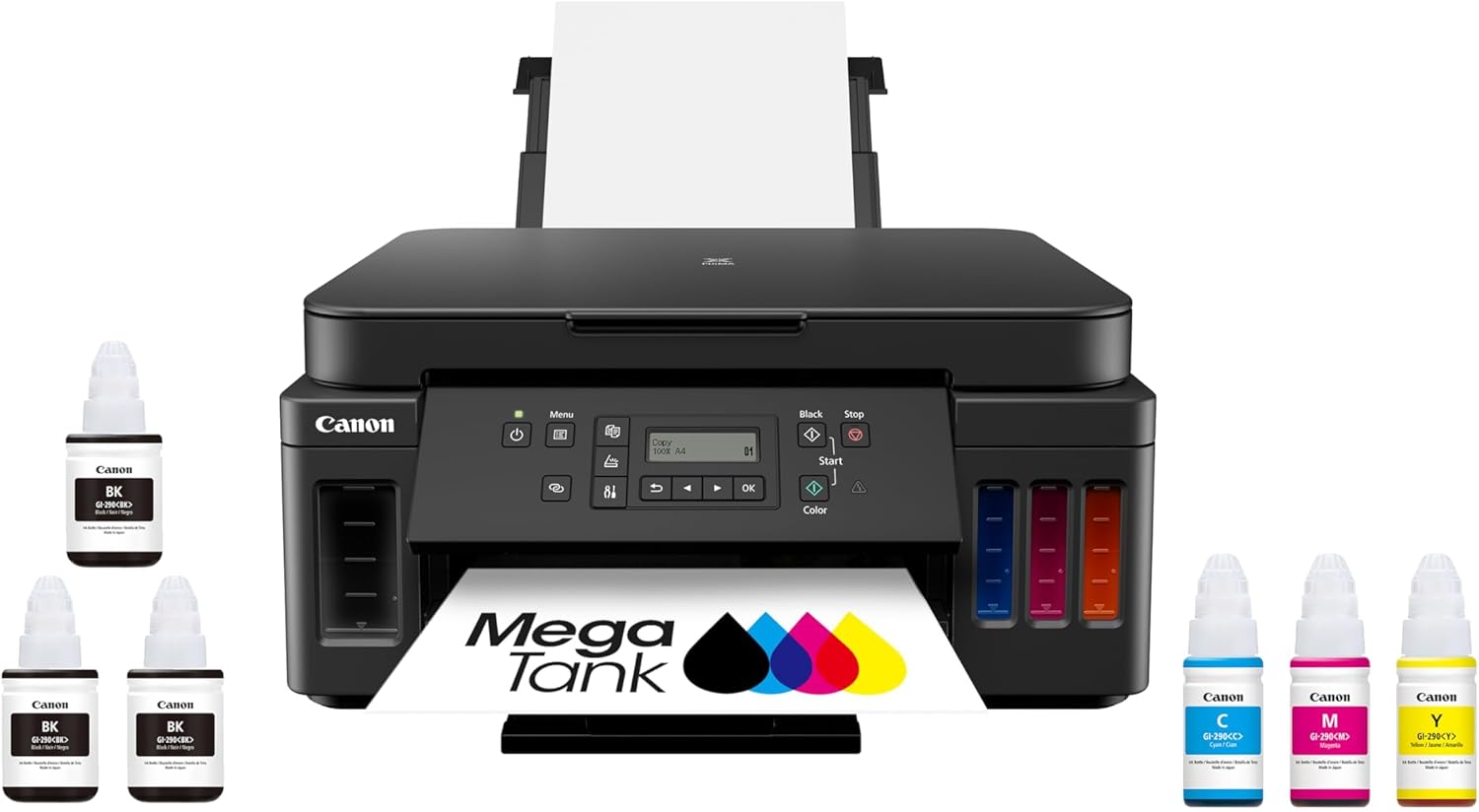 | 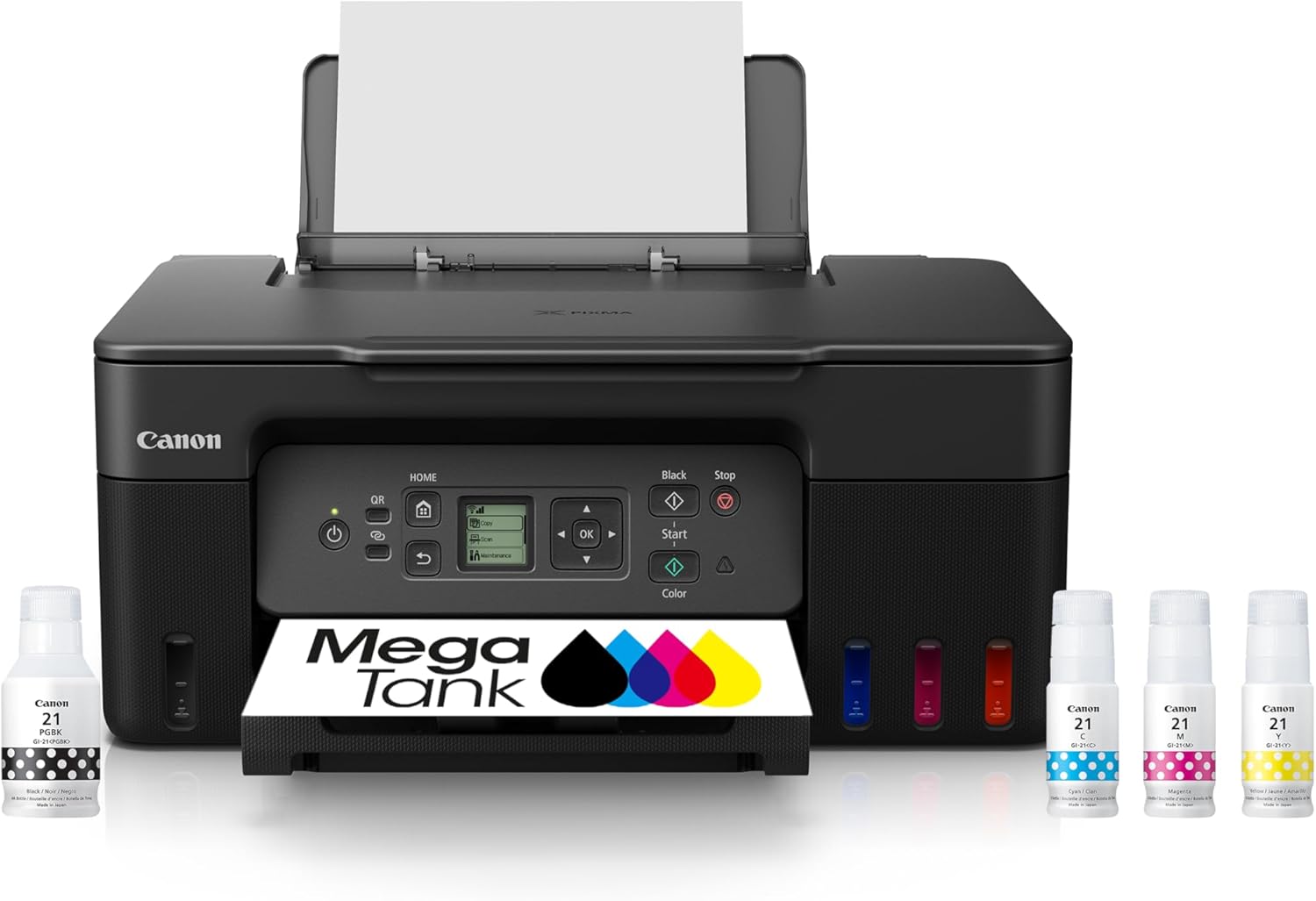 | |
Best for | Families + mixed printing | High-volume home office / small business | Photos, art prints, creative projects | High-yield home office printing | Tight budgets + basics |
Ink system | Refillable ink bottles | Refillable MegaTank | Refillable EcoTank (photo-focused) | Refillable MegaTank | Refillable MegaTank |
Prints a lot without refills | Yes (high-yield design) | Yes (built for volume) | Yes (low cost-per-print focus) | Yes (6,000 black / 7,700 color per set claim) | Yes (budget tank concept) |
Paper capacity vibe | Family-friendly | “I print stacks” (up to 600 sheets cited) | Creative-first, not an office tank | Big (350-sheet capacity) | Basic |
Duplex printing | Depends on config | Typically yes for this class | Yes (common ET-8550 use-case) | Yes (Canon lists duplex capability) | Varies by model/version |
Price |  | | | | |
The core misunderstanding (and why people regret ink tanks)
Most people ask the wrong question:
“Is an ink tank printer good if I don’t print often?”
The better question is:
“Am I willing to do very minimal upkeep to keep an inkjet healthy?”
Ink tank printers are still inkjet printers. The tank just changes how ink is stored and refilled, not how ink behaves once it’s inside the print system.
That distinction explains almost every complaint you’ll see online.
Why ink tanks can struggle with infrequent use
1. Ink doesn’t like to sit still
Inkjet printers move liquid ink through extremely fine nozzles. When a printer sits unused:
- Ink can thicken or partially dry near the nozzle
- Printers may run automatic cleaning cycles to compensate
- Cleaning cycles use ink (yes, even on tank printers)
This isn’t a defect. It’s physics.
Key point:
Ink tank printers reduce ink cost, not ink movement. They still need ink flow to stay healthy.
2. “Clogging” is usually gradual, not catastrophic
Most infrequent users imagine clogs as a sudden failure. In reality, it’s usually more subtle:
- Slightly faded colors
- Missing lines in text
- Extra cleaning cycles when you press print
True, unrecoverable clogs are rare. What people usually experience is a printer compensating for inactivity by using more ink to self-maintain.
That’s inconvenient, but not fatal.
Verdict-first (my 5 best picks):
- Best overall for most people: HP Smart Tank 7301 (balanced speed/features + easy home use).
- Best for home office volume: Canon MAXIFY GX7020 MegaTank (big paper capacity + business mindset).
- Best for photos + creative work: Epson EcoTank Photo ET-8550 (borderless 13×19 + standout photo quality).
- Best value all-in-one MegaTank: Canon PIXMA G7020 (high page yield + duplex + big capacity for the money).
- Best budget refillable tank: Canon MegaTank G3270 (cheap entry point that still gives you the ink-tank savings).
3. Cheap ink doesn’t mean zero waste
Ink tanks are economical because refills last a long time, not because they never waste ink.
If you print very rarely, you might notice:
- Ink levels dropping slowly even when you don’t print
- More maintenance cycles than expected
- A feeling of “why is it doing this?”
That doesn’t mean the printer is broken, but it means it’s trying to stay ready.
Feature | |||||
|---|---|---|---|---|---|
| | | | | |
Best for | Families + mixed printing | High-volume home office / small business | Photos, art prints, creative projects | High-yield home office printing | Tight budgets + basics |
Ink system | Refillable ink bottles | Refillable MegaTank | Refillable EcoTank (photo-focused) | Refillable MegaTank | Refillable MegaTank |
Prints a lot without refills | Yes (high-yield design) | Yes (built for volume) | Yes (low cost-per-print focus) | Yes (6,000 black / 7,700 color per set claim) | Yes (budget tank concept) |
Paper capacity vibe | Family-friendly | “I print stacks” (up to 600 sheets cited) | Creative-first, not an office tank | Big (350-sheet capacity) | Basic |
Duplex printing | Depends on config | Typically yes for this class | Yes (common ET-8550 use-case) | Yes (Canon lists duplex capability) | Varies by model/version |
Price | | | | | |
The honest trade-off: cost vs convenience
Here’s where most competitor articles fail. They treat “worth it” as universal.
Ink tank printers are worth it if:
- You print at least a little every few weeks
- You value low cost per page over total hands-off convenience
- You don’t mind a tiny routine (more on that below)
- You occasionally print color (where tanks shine)
Ink tank printers may not be worth it if:
- You print once every few months
- You want a printer you can ignore completely
- You only print black-and-white text
- Any maintenance feels like a hassle
In other words:
Ink tanks reward consistency, not neglect.
The simple routine that prevents 90% of problems
This is the part most articles bury or skip entirely.
If you do one small thing, ink tank printers behave much better with infrequent use:
The “10-second rule”
- Print any small page (even a test pattern or short document)
- Do this once every 2–4 weeks
That’s it.
This keeps ink moving, prevents nozzle drying, and reduces aggressive cleaning cycles.
You don’t need special paper.
You don’t need full-color photos.
You just need ink flow.
For many users, that’s a perfectly reasonable trade for cheap ink.
What about drying out completely?
This is often overstated.
Ink in sealed tanks dries extremely slowly. The vulnerable point isn’t the tank, it’s the print head/nozzles, which are exposed to air.
Modern ink tank designs:
- Use capped print heads when idle
- Automatically park and seal nozzles
- Run maintenance only when needed
If drying out were as common as some forum posts suggest, ink tank printers wouldn’t be as widely recommended as they are.
A realistic comparison (no brand names)
Let’s compare three common printer lifestyles:
Cartridge inkjet + infrequent use
- Lower upfront cost
- Higher ink replacement cost
- Still subject to clogs and cleaning
- Often more expensive long-term
Ink tank + infrequent use
- Higher upfront cost
- Much cheaper ink over time
- Needs light, predictable upkeep
- Less painful when ink is wasted
Laser printer + infrequent use
- Higher upfront cost
- No ink drying issues
- Cheap for black text
- No color flexibility
The key insight:
Ink tanks aren’t uniquely bad at infrequent use, they’re just more honest about the trade-off.
Common myths (debunked)
“Ink tank printers are bad if you don’t print often”
Not inherently. They just benefit from minimal activity.
“They clog more than regular inkjets”
They’re the same type of inkjet. The difference is ink storage, not nozzle design.
“The ink will dry out in the tanks”
The tanks are sealed. Drying happens at the print head, not inside the reservoir.
“Cleaning cycles cancel out the savings”
Only if you never print. Even then, tank refills are usually far cheaper than cartridges.
When an ink tank still makes sense for light users
Ink tank printers can still be a good choice if:
- You want color printing without fear of cartridge prices
- You’re okay with a once-a-month habit
- You value long-term savings over zero-maintenance ownership
- You want flexibility (photos, school projects, documents)
They’re especially appealing for:
- Families who print in bursts
- Students who print irregularly
- Home users who want color without subscription stress
When you should skip an ink tank
You may want to look elsewhere if:
- You truly print once or twice a year
- You only print black text
- You don’t want any printer upkeep
- You want instant printing after months of inactivity
That’s not a failure. It’s just matching the tool to the job.
FAQ: Are Ink Tank Printers Worth It If You Don’t Print Often?
Do ink tank printers clog if not used?
They can, but most issues are mild and preventable with occasional printing.
Is an ink tank printer worth it for occasional home use?
Yes, if you’re willing to print something small every few weeks. No, if you want zero interaction.
How often should I print to avoid problems?
Roughly once every 2–4 weeks is enough for most users.
Do ink tank printers waste ink when idle?
They may use small amounts for maintenance, but refills are still far cheaper than cartridges.
Are ink tanks better than cartridges for light users?
Often yes, because even wasted tank ink costs less than replacing cartridges frequently.
Final reality check
Ink tank printers are not “set-and-forget” appliances, but they’re also not fragile divas.
If you:
- Print occasionally
- Don’t mind a tiny routine
- Want to stop overpaying for ink
Then yes, an ink tank printer can absolutely be worth it, even if you don’t print often.
If you want something you can ignore for months at a time and expect instant perfection, you’ll be happier with a different printing approach.
Understanding that distinction is what separates happy owners from regret posts.
Other Interesting Articles
- Best Cheap Printers With Cheap Ink (2026): 5 Picks That Stay Affordable After Checkout
- Best Printers With Refillable Ink Tanks (2026): 5 Picks That Actually Save You Money
- Epson EcoTank Photo ET-8550 vs Canon imagePROGRAF PRO-300: Which Photo Printer is Best?
- Epson EcoTank Photo ET-8550 vs ET-15000: Beautiful Photos or Common Office Printer
- Epson EcoTank Photo ET-8550 vs Canon PIXMA PRO-200S: Price or Quality Photo Printing
- Epson EcoTank Photo ET-8550 vs ET-8500: One Major Difference You Need to Know
About RegalPrinter
RegalPrinter offers the best reviews for inkjet printers, laser printers, 3D printers, and other similar office machines that you use in your everyday life. We provide expert information that will ensure you are making the right decision whenever buying any of these machines. Our “Are Ink Tank Printers Worth It If You Don’t Print Often?” post will ensure you know which printer is right for you.