I'm a participant in the Amazon Services LLC Associates Program, an affiliate advertising program designed to provide a means for me to earn fees by linking to Amazon.com and affiliated sites.
If you’re stuck choosing 11×17 vs 13×19 printing, you’re not really choosing “two paper sizes.”
You’re choosing what kind of projects you want to print without workarounds, how much borderless/cropping you’re willing to tolerate, and whether you’re planning to print like a home office… or like a mini print shop.
Here’s the verdict up front:
- Choose 11×17 if you mostly print documents, school projects, spreadsheets, flyers, and simple posters and want the most “standard” step up from letter size.
- Choose 13×19 if you care about photos, art prints, portfolios, and selling prints, because that extra width changes what’s possible (and how professional the output looks).
Most guides just say “13×19 is bigger.” This one tells you when it actually matters.
Feature | |||||
|---|---|---|---|---|---|
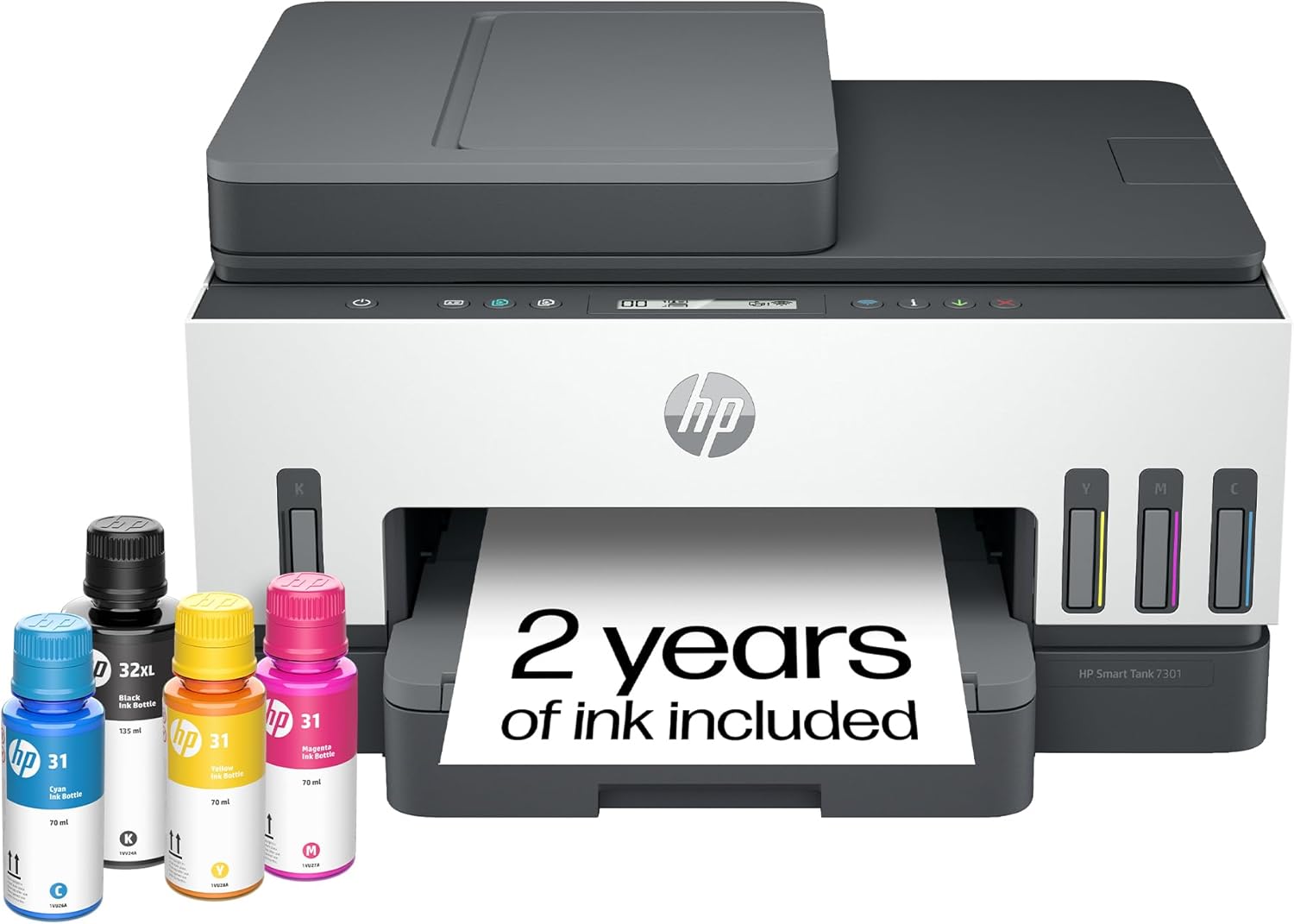 | 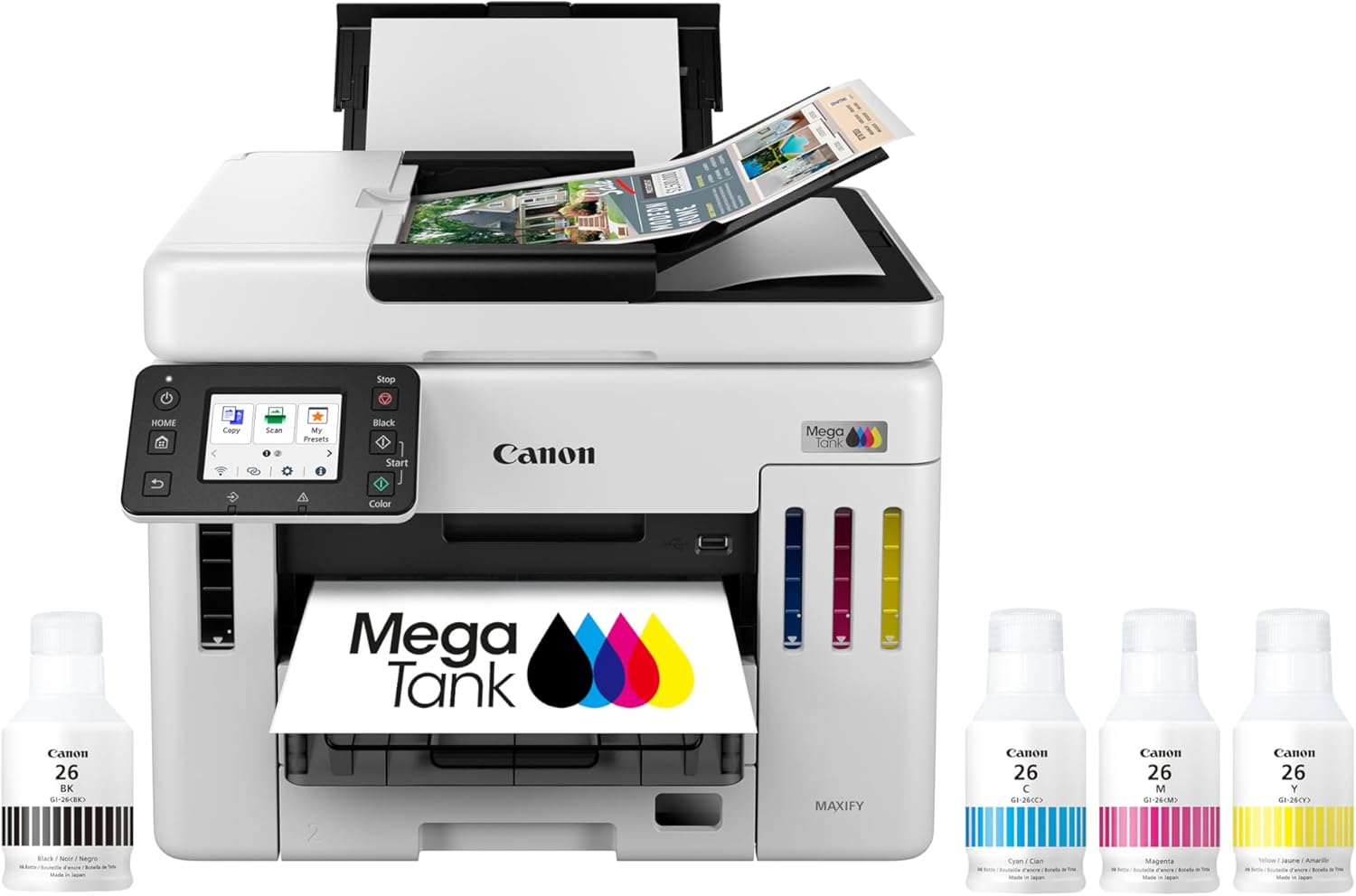 | 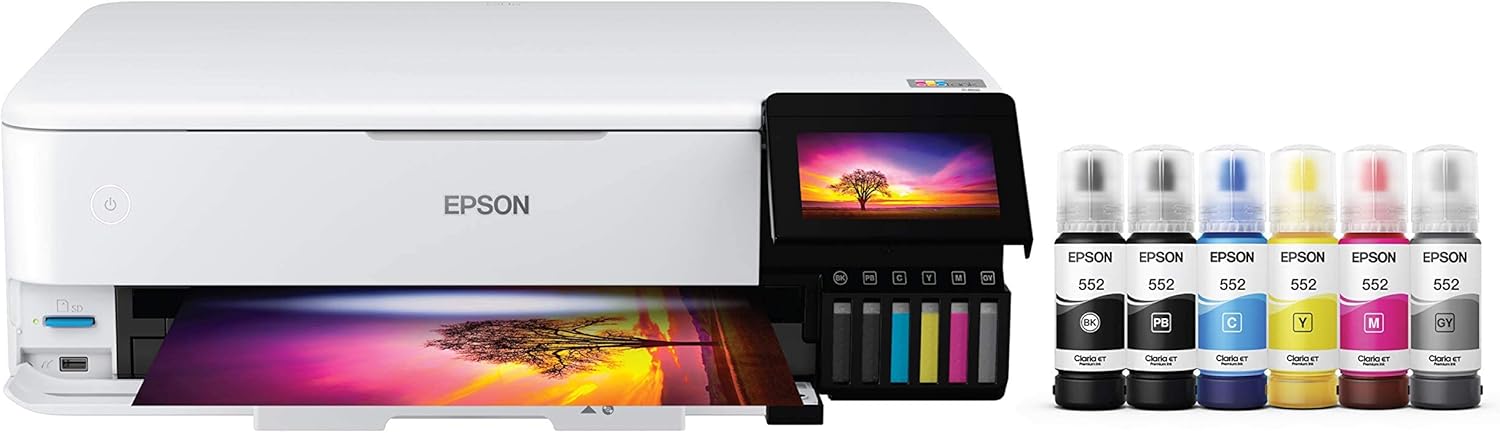 |  |  | |
Best for | Families + mixed printing | High-volume home office / small business | Photos, art prints, creative projects | High-yield home office printing | Tight budgets + basics |
Ink system | Refillable ink bottles | Refillable MegaTank | Refillable EcoTank (photo-focused) | Refillable MegaTank | Refillable MegaTank |
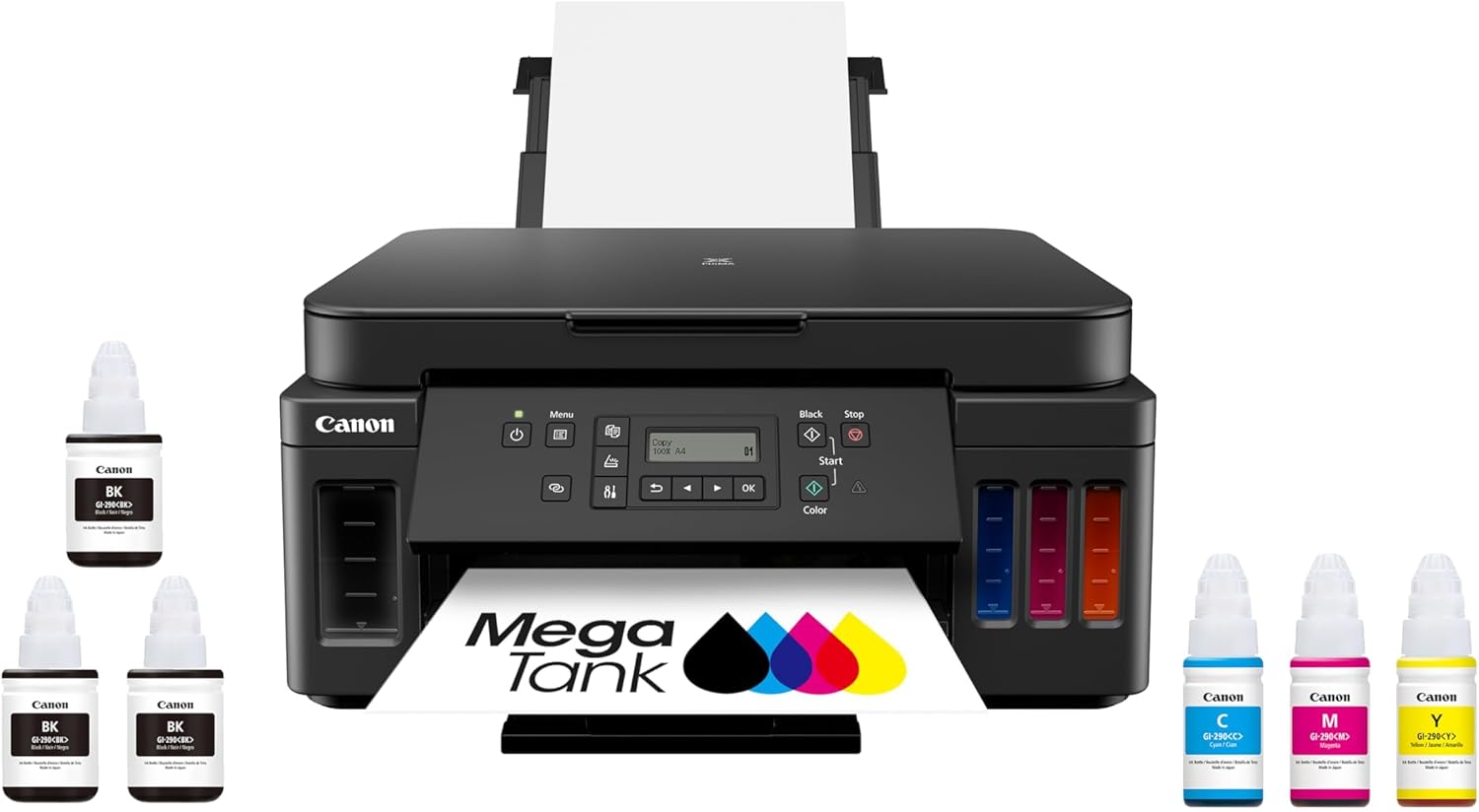
Prints a lot without refills | Yes (high-yield design) | Yes (built for volume) | Yes (low cost-per-print focus) | Yes (6,000 black / 7,700 color per set claim) | Yes (budget tank concept) |
Paper capacity vibe | Family-friendly | “I print stacks” (up to 600 sheets cited) | Creative-first, not an office tank | Big (350-sheet capacity) | Basic |
Duplex printing | Depends on config | Typically yes for this class | Yes (common ET-8550 use-case) | Yes (Canon lists duplex capability) | Varies by model/version |
Price |  | | | | |
First: what these sizes are called (so search results stop confusing you)
- 11×17 is often called Tabloid (and sometimes “Ledger” depending on orientation conventions).
- 13×19 is commonly referred to as Super B.
You don’t need to memorize this, but it helps when you’re shopping or reading printer specs.
The real difference isn’t 2 inches: it’s what fits
11×17 (Tabloid)
Feels like: “Letter size, but poster-ish.”
It’s ideal for:
- homework posters
- two-page spreads (like side-by-side pages)
- basic signage
- office charts and spreadsheets
13×19 (Super B)
Feels like: “Now we’re doing art/photo.”
It’s ideal for:
- photo prints with breathing room
- art prints you can sell
- portfolios
- prints that look “gallery-ish” instead of “school project”
The key:
13×19 is where prints start to look intentional.
Top 5 Picks:
- Best overall for most people: HP Smart Tank 7301 (balanced speed/features + easy home use).
- Best for home office volume: Canon MAXIFY GX7020 MegaTank (big paper capacity + business mindset).
- Best for photos + creative work: Epson EcoTank Photo ET-8550 (borderless 13×19 + standout photo quality).
- Best value all-in-one MegaTank: Canon PIXMA G7020 (high page yield + duplex + big capacity for the money).
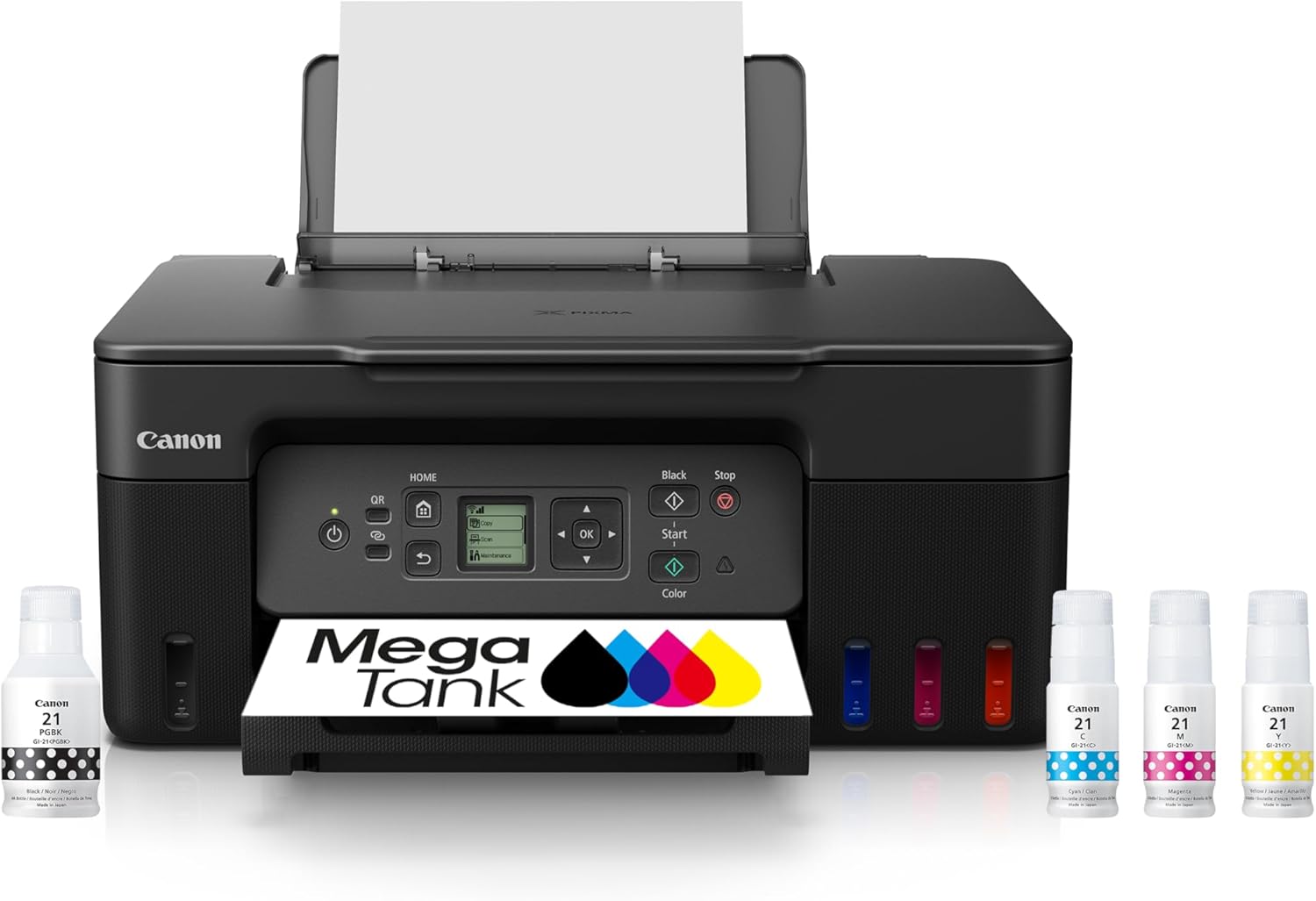
- Best budget refillable tank: Canon MegaTank G3270 (cheap entry point that still gives you the ink-tank savings).
Visual framing: why 13×19 looks more professional
A lot of “I want it to look premium” is just space.
13×19 gives you room for:
- better margins
- cleaner compositions
- less cramped designs
- easier matting/framing
This is especially true for:
- photography
- illustration
- typography-heavy posters
11×17 can still look great. But 13×19 makes it easier to get that “finished” look without feeling tight.
Borderless printing and cropping: which size behaves better?
This is where people get surprised.
11×17 borderless
- Often doable
- But you’re more likely to run into cropping if your image aspect ratio doesn’t match perfectly
- Designs with thin borders can look off because tiny feed shifts are more noticeable
13×19 borderless
- Gives you more space to work with
- Allows “safe zones” around important content
- Makes it easier to design with bleed without sacrificing the core image
Translation:
If you’re picky about composition, 13×19 is easier to print cleanly.
Feature | |||||
|---|---|---|---|---|---|
| | | | | |
Best for | Families + mixed printing | High-volume home office / small business | Photos, art prints, creative projects | High-yield home office printing | Tight budgets + basics |
Ink system | Refillable ink bottles | Refillable MegaTank | Refillable EcoTank (photo-focused) | Refillable MegaTank | Refillable MegaTank |
Prints a lot without refills | Yes (high-yield design) | Yes (built for volume) | Yes (low cost-per-print focus) | Yes (6,000 black / 7,700 color per set claim) | Yes (budget tank concept) |
Paper capacity vibe | Family-friendly | “I print stacks” (up to 600 sheets cited) | Creative-first, not an office tank | Big (350-sheet capacity) | Basic |
Duplex printing | Depends on config | Typically yes for this class | Yes (common ET-8550 use-case) | Yes (Canon lists duplex capability) | Varies by model/version |
Price | | | | | |
Aspect ratio: the hidden reason your prints don’t match your screen
Most photos and designs don’t naturally match these paper ratios.
- Many camera/phone photos are 4:3 or 16:9
- Many print-friendly compositions aim closer to 3:2 or “poster ratios”
So when you print:
- you either get borders
- or the printer crops
Which size needs less compromise?
- 11×17 is often used for documents and layouts that tolerate borders
- 13×19 is often chosen by people willing to crop intentionally for a better final look
The real trick:
Whichever size you choose, you’ll get better results if you crop the image yourself before printing, so you control the framing.
What you’re really printing (and which size fits)
Choose 11×17 if you’re doing:
- school posters
- business flyers
- worksheets and handouts
- tabloid-size brochures
- big spreadsheets and charts
- signage that needs to be readable, not artistic
11×17 is the practical “big enough” format.
Choose 13×19 if you’re doing:
- photography prints
- art prints and illustrations
- portfolio pieces
- prints you plan to sell
- wall decor
- anything where people will stand close and judge quality
13×19 is the “presentation size.”
“Selling prints” reality check: 13×19 is the sweet spot
If you plan to sell prints (even casually), 13×19 gives you:
- more premium perceived value
- better options for trimming and margins
- flexibility to offer multiple final sizes from one master print
For example, a 13×19 print can be trimmed down into smaller formats with cleaner margins. 11×17 gives less room for that.
This is why 13×19 is common in portfolio and art printing workflows.
Framing and matting: which size is easier?
Here’s the annoying truth: framing can dictate the decision.
11×17
- Often easier to find “office-style” frames
- Common in schools and workplaces
- Looks clean in simple frames
13×19
- More “art print” framing vibe
- Often benefits from mats
- You may frame it as-is or trim it to standard frame sizes depending on preference
If you hate framing complications:
11×17 tends to be more plug-and-play.
If you care about gallery presentation:
13×19 is worth the extra effort.
Cost considerations (paper, ink, and waste)
Bigger paper costs more. That’s obvious.
What’s less obvious:
- 13×19 prints can waste less creative work because the result looks better with fewer “redo” attempts
- 11×17 can waste less money per test print
If you’re experimenting, learning, or dialing in settings:
- 11×17 is cheaper to test
- 13×19 is the payoff size once you’ve got it right
The decision shortcut (the one you actually want)
Ask yourself these three questions:
1) Do you print mostly documents or mostly visuals?
- Documents → 11×17
- Visuals (photos/art) → 13×19
2) Do you want “good enough big” or “display-worthy”?
- Big and functional → 11×17
- Display-worthy → 13×19
3) Will anyone stand close and judge the output?
- No → 11×17
- Yes → 13×19
That’s the decision in real life.
FAQ: 11×17 vs 13×19 Printing
Is 13×19 much bigger than 11×17?
Yes in practice. It’s not just size, it’s how much better your layout, margins, and presentation can look.
What is 11×17 paper used for?
Tabloid-size handouts, posters, charts, spreadsheets, newsletters, and school or office prints.
What is 13×19 paper best for?
Photo prints, art prints, portfolios, and anything you want to look premium on a wall.
Can you print photos on 11×17?
Yes, but you may have tighter margins and less “gallery” presentation space.
Do I need 13×19 if I’m not selling prints?
Not necessarily. If you mostly print practical items, 11×17 is the sweet spot.
Final verdict: which size do you actually need?
- Pick 11×17 if your printing is mostly functional: school, office, charts, handouts, flyers, basic posters.
- Pick 13×19 if your printing is meant to be seen: photos, art, portfolios, decor, and especially prints you’d ever sell or display.
If you’re still unsure, here’s the simplest truth:
11×17 is the “bigger document” size.
13×19 is the “real print” size.
Other Interesting Articles
- Best Cheap Printers With Cheap Ink (2026): 5 Picks That Stay Affordable After Checkout
- Best Printers With Refillable Ink Tanks (2026): 5 Picks That Actually Save You Money
- Epson EcoTank Photo ET-8550 vs Canon imagePROGRAF PRO-300: Which Photo Printer is Best?
- Epson EcoTank Photo ET-8550 vs ET-15000: Beautiful Photos or Common Office Printer
- Epson EcoTank Photo ET-8550 vs Canon PIXMA PRO-200S: Price or Quality Photo Printing
- Epson EcoTank Photo ET-8550 vs ET-8500: One Major Difference You Need to Know
About RegalPrinter
RegalPrinter offers the best reviews for inkjet printers, laser printers, 3D printers, and other similar office machines that you use in your everyday life. We provide expert information that will ensure you are making the right decision whenever buying any of these machines. Our “11×17 vs 13×19 Printing” post will ensure you know which is right for you.